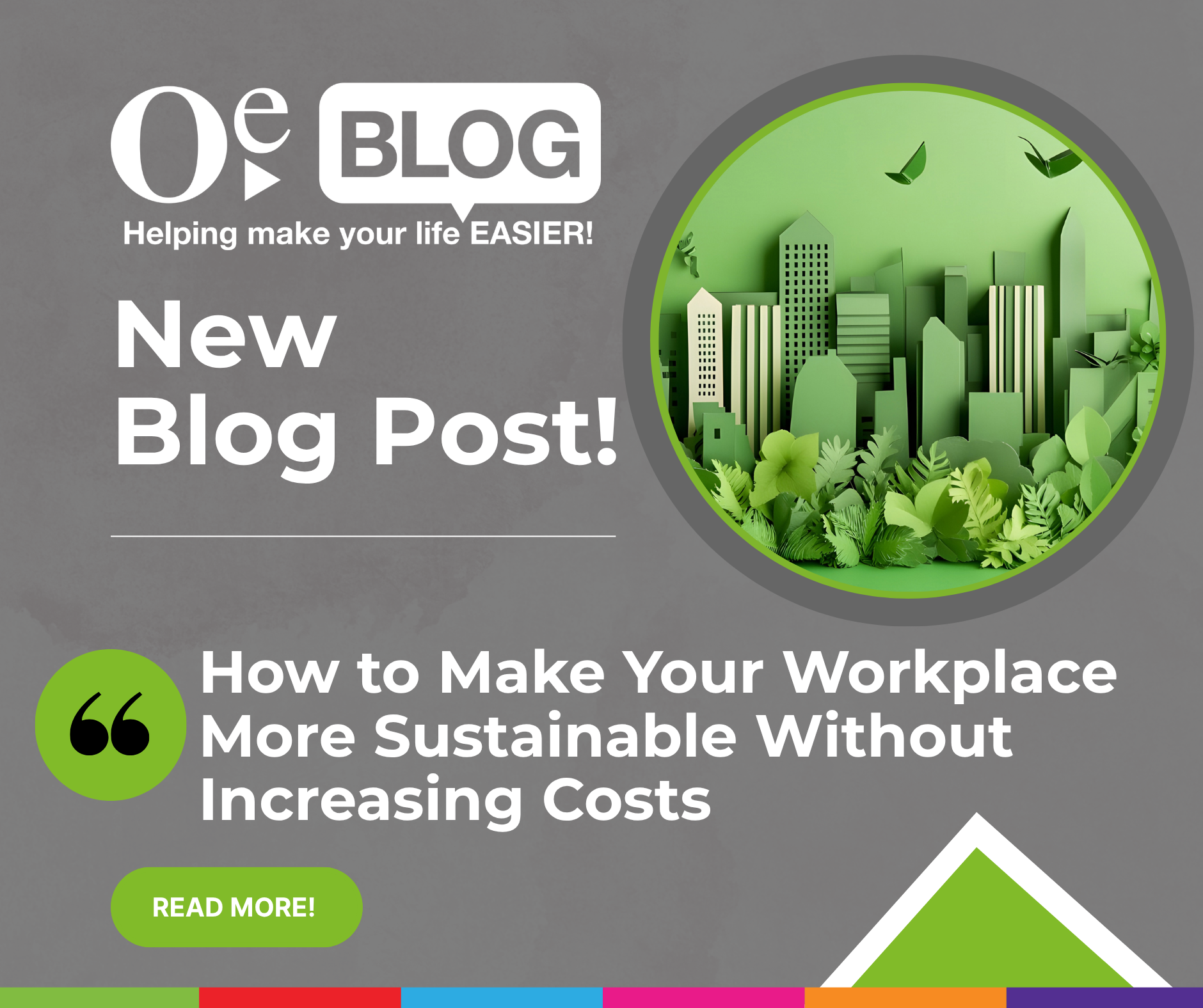
How to Make Your Workplace More Sustainable Without Increasing Costs
Making your workplace more sustainable sounds like it should come with a price tag.
New equipment. More expensive products. A complete overhaul of the way the office works.
But it doesn’t have to.
In fact, some of the most practical sustainability changes are also good ways to reduce unnecessary spending. Using less, wasting less and ordering more efficiently can all make a difference without adding another cost to the business.
For office managers, facilities teams and procurement professionals, the trick is to focus on changes that people can actually stick to.
Here are some good places to start.
1. Start With What You’re Already Wasting
Before buying anything new, look at what you’re currently throwing away.
Paper is an obvious example, but don’t stop there.
Are disposable cups being used when mugs are available? Are half-used notebooks regularly left behind? Are cleaning products being over-ordered? Is stationery sitting untouched in cupboards while somebody orders more?
A quick look at your bins, stock cupboards and purchasing history can reveal plenty.
Sometimes the most sustainable product is simply the one you don’t need to order again yet.
2. Make Double-Sided Printing the Default
We’re not going to suggest becoming a completely paperless office overnight.
Some businesses still need to print, and sometimes a physical document is simply more practical.
Instead, look at how paper is being used.
Setting printers to double-sided as standard is a small change that can reduce paper consumption without employees having to think about it every time they press print.
You can also encourage teams to ask one simple question before printing:
Do I actually need a physical copy of this?
No posters saying “think before you print” in 72-point font required.
3. Choose Recycled Paper Where It Makes Sense
If your business uses a lot of paper, switching some or all of your everyday requirements to recycled options is worth considering.
Modern recycled office paper is suitable for a wide range of everyday printing and copying requirements, so it doesn’t necessarily need to feel like a compromise.
Look at what you’re printing and choose products accordingly. Premium paper doesn’t need to be the default for an internal document that’s going to be read once and recycled.
Matching the product to the job can help control costs as well as waste.
4. Replace Some Single-Use Products With Reusable Ones
Office kitchens can generate an impressive amount of rubbish.
Disposable cups, plastic cutlery, paper plates and individual drinks containers may be convenient, but the cost adds up when they’re being replaced week after week.
Where practical, reusable mugs, glasses, plates and cutlery can reduce the number of disposable products you need to keep buying.
You don’t need to replace everything at once.
Start with the disposable products your workplace gets through most frequently and work from there.
5. Stop Over-Ordering
Bulk buying can look like a saving.
Sometimes it is.
But ordering six months’ worth of something simply because the unit price is lower isn’t particularly efficient if half of it sits unused in a cupboard.
Good stock management is surprisingly important for workplace sustainability.
Know what you already have, understand roughly how quickly it’s used and reorder at sensible intervals.
That helps reduce waste while also avoiding money being tied up in stock you don’t currently need.
6. Look More Closely at Your Cleaning Products
Cleaning and hygiene products are another area where businesses can make relatively straightforward changes.
When products need replacing, consider whether there are alternatives with recycled content, recyclable packaging, concentrated formats or environmental credentials that fit your requirements.
Concentrated products can be particularly useful in some workplaces because less packaging and product may need to be transported and stored.
But don’t swap products purely because the packaging looks green.
A product still needs to do the job properly. If you end up using twice as much of it, you’ve probably missed the point.
7. Consolidate Your Deliveries
How many separate deliveries arrive at your workplace in a typical week?
Stationery on Monday. Cleaning products on Tuesday. Kitchen supplies on Wednesday. Another stationery order on Thursday because somebody forgot something.
Beyond the products themselves, it’s worth thinking about how they’re getting to you.
Consolidating more workplace purchasing with fewer suppliers and placing planned orders rather than lots of small ones can help reduce the number of deliveries your business receives.
There can be a commercial benefit too: fewer orders can mean less time spent placing them, receiving deliveries and processing invoices.
Sustainability and procurement efficiency can often go hand in hand.
8. Give Products a Second Life Inside the Office
Before something goes in the bin, ask whether somebody else can use it.
Folders, storage boxes, desk organisers, furniture and other workplace items can often be moved between departments rather than replaced.
If a team is being reorganised, create a central area for unwanted but usable office supplies before buying new ones.
It’s a simple idea, but it helps tackle one of the easiest forms of waste to avoid: throwing away something perfectly usable and then purchasing another one.
9. Make Recycling Easy
If somebody has to walk across the building to find the right recycling bin, there’s a good chance their empty drinks can is going into the nearest general waste bin instead.
Recycling needs to be convenient.
Look at where waste is actually generated and position the appropriate bins nearby. Kitchens, printing areas and breakout spaces are obvious places to review.
Clear labelling helps too.
People shouldn’t need a ten-minute debate with a colleague to work out which bin something belongs in.
10. Buy Better When Products Need Replacing
Sustainability isn’t always about buying a product labelled “eco”.
Sometimes it’s about buying something that lasts.
A cheap office item that needs replacing repeatedly may create more waste and cost the business more than a durable alternative with a higher initial price.
When you’re comparing workplace products, consider cost per use, not just the number on the price tag.
Ask how often the item will be used, how long it’s likely to last and whether replacement parts or refills are available.
That can lead to better purchasing decisions without automatically increasing your overall budget.
11. Get Employees Involved, Without Making It a Chore
Most sustainability initiatives depend on people changing small everyday habits.
That’s much easier when the changes are straightforward.
Make reusable options readily available. Put recycling bins where people need them. Set printers up efficiently. Make it easy to return unused stationery to a central cupboard.
In other words, make the sustainable choice the easy choice.
You don’t need to send a weekly email reminding everyone to save the planet by using the correct bin.
Design the workplace so that doing the sensible thing happens naturally.
12. Look at the Whole Cost, Not Just the Product Price
A more sustainable purchasing decision can also be a more commercially sensible one.
Consider two options.
One product costs slightly less but is replaced frequently, arrives in lots of individual packaging and is ordered separately several times a year.
Another lasts longer, can be bought as part of a consolidated order and doesn’t need replacing as often.
The cheaper-looking option isn’t necessarily the one costing your business less.
For procurement teams, sustainability becomes much more practical when it’s considered alongside usage, lifespan, waste, deliveries and staff time rather than treated as a separate objective.
You Don’t Have to Change Everything at Once
Making a workplace more sustainable doesn’t need to start with a huge policy document or an expensive office transformation.
Start with the everyday things your business already buys and uses.
Could you use less paper?
Could something disposable become reusable?
Could you reduce unnecessary stock?
Could you choose a longer-lasting alternative?
Could three deliveries become one?
Small changes repeated across a workplace, and throughout the year – can have a much bigger effect than one impressive initiative nobody maintains.
Smarter Purchasing Can Be More Sustainable Purchasing
At Office Essentials, we help UK businesses source the everyday products they need to keep their workplaces running, from paper and stationery to cleaning, catering and workplace supplies.
That puts purchasing teams in a good position to make practical changes.
Rather than sustainability automatically meaning spend more, it can mean buy more carefully, waste less and make every order work harder.
If you’re reviewing your workplace purchasing and want to explore more sustainable options without losing sight of your budget, talk to the Office Essentials team about the products you’re currently using and where practical alternatives could make sense.